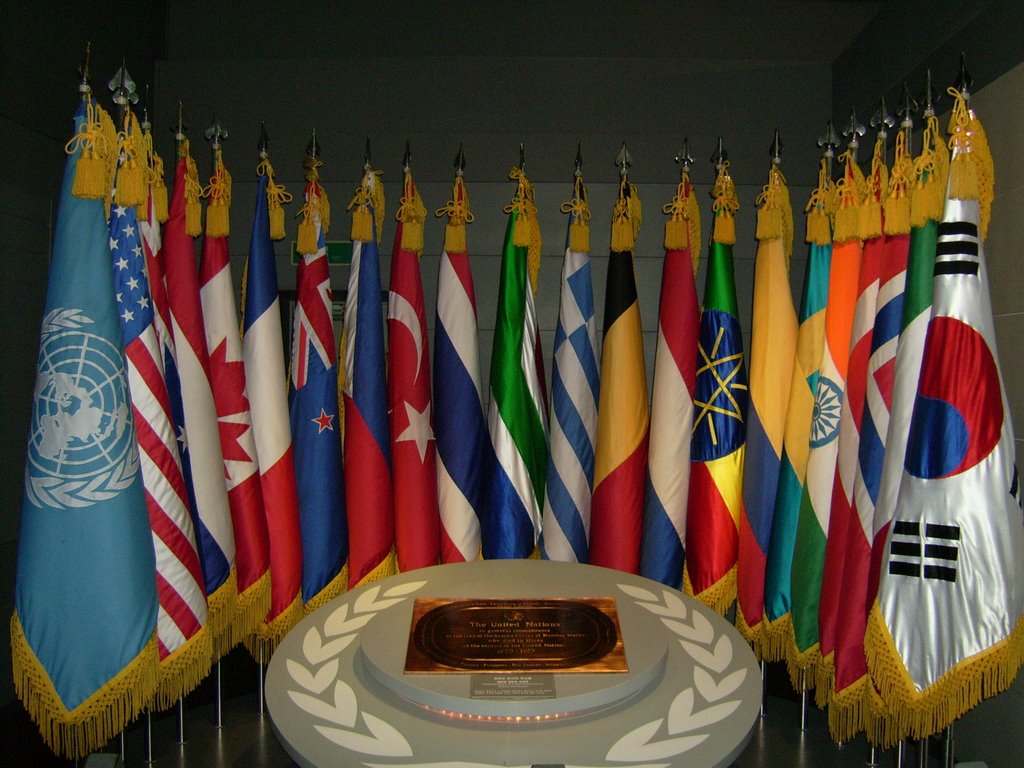
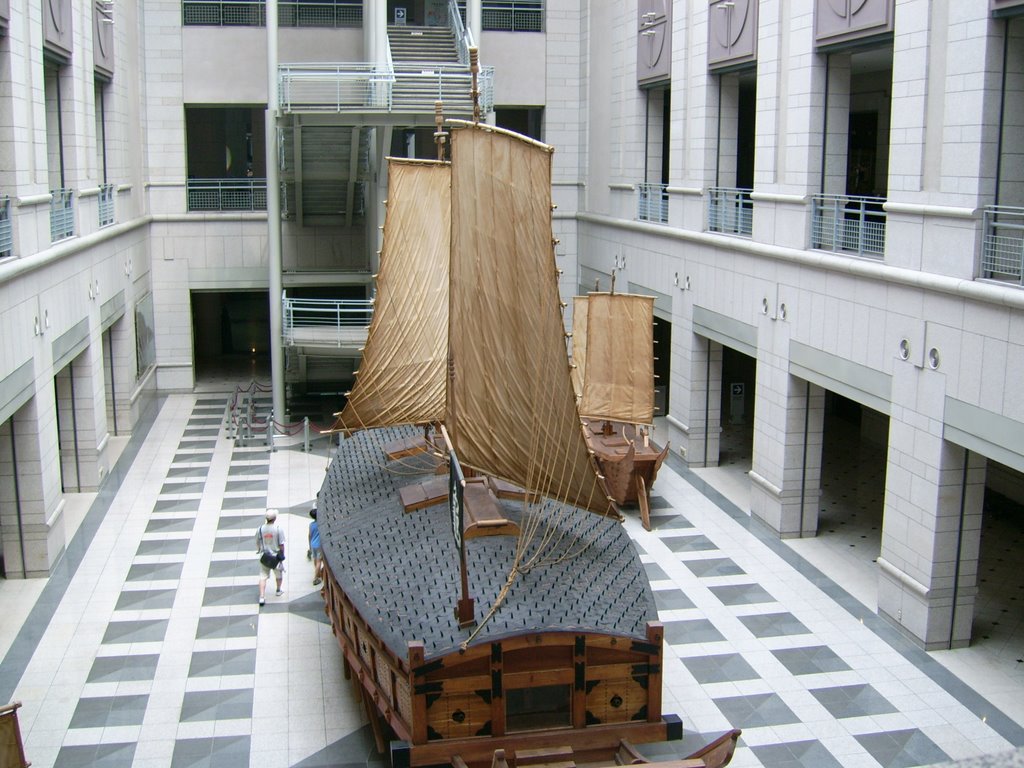
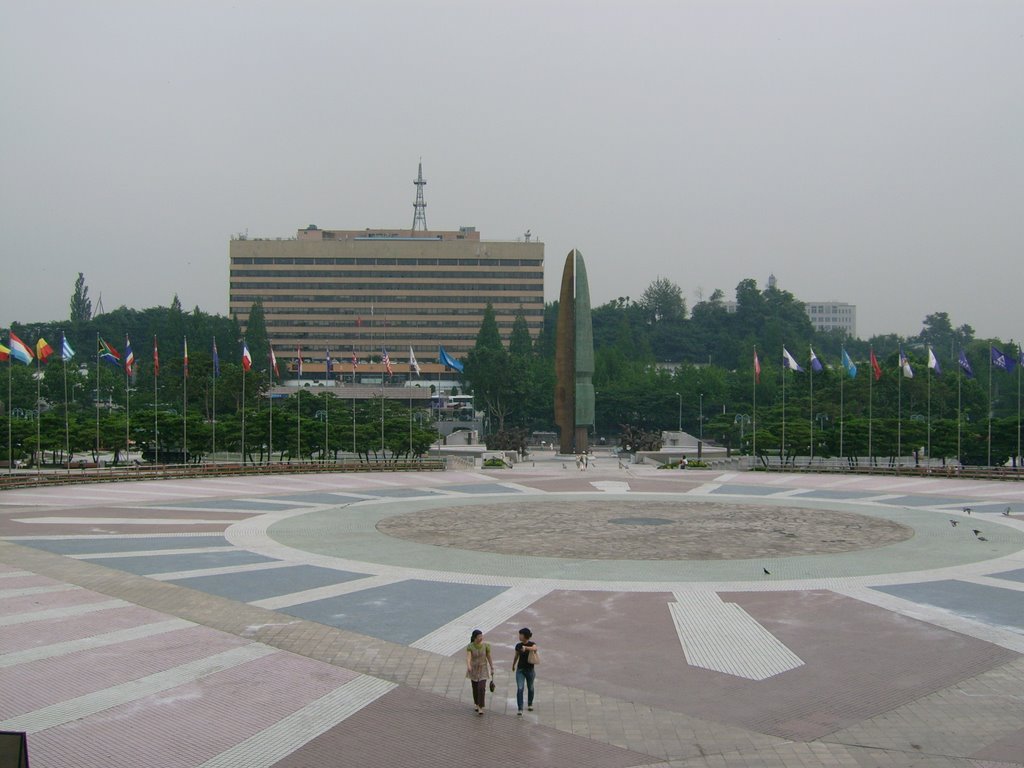
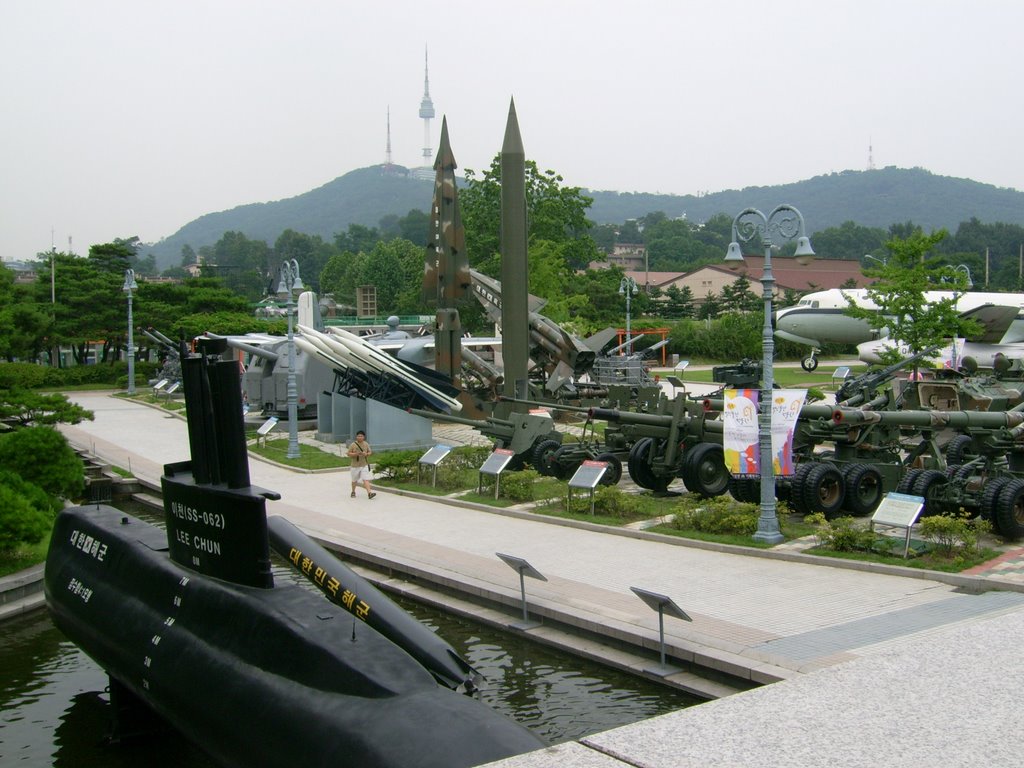
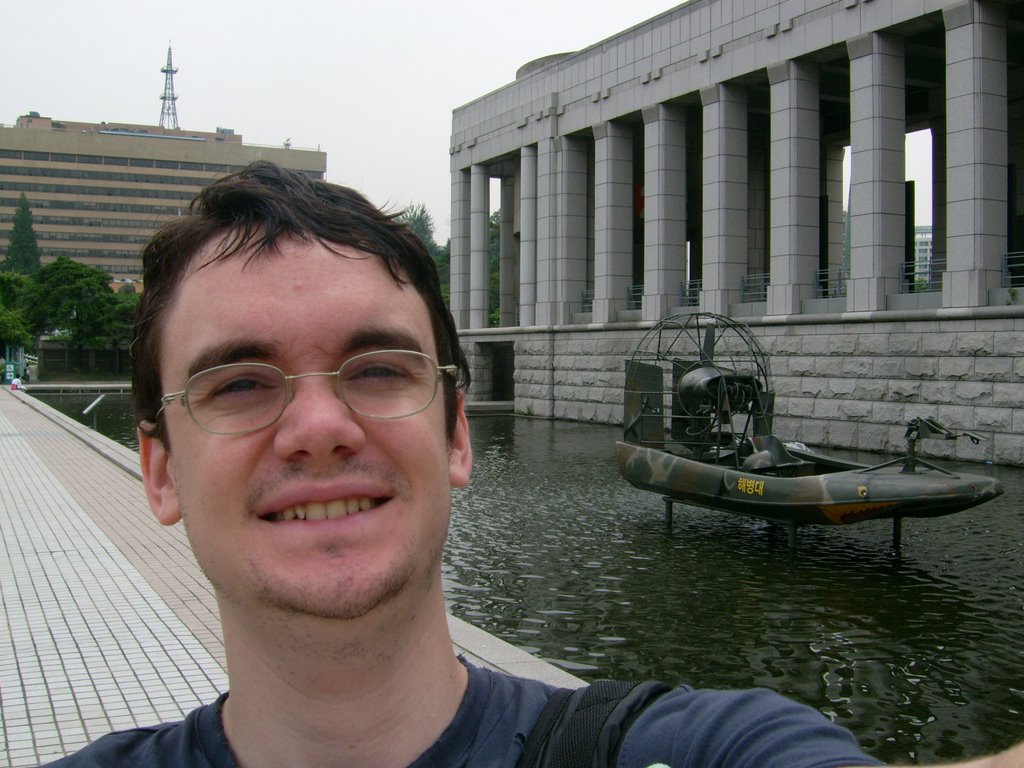
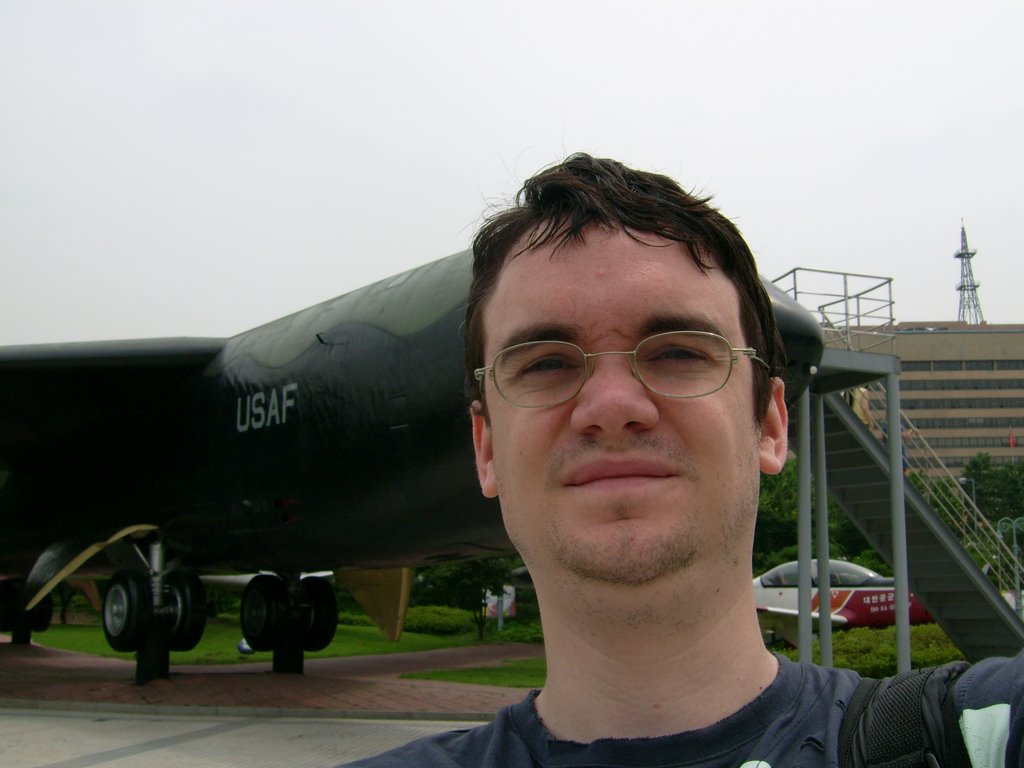
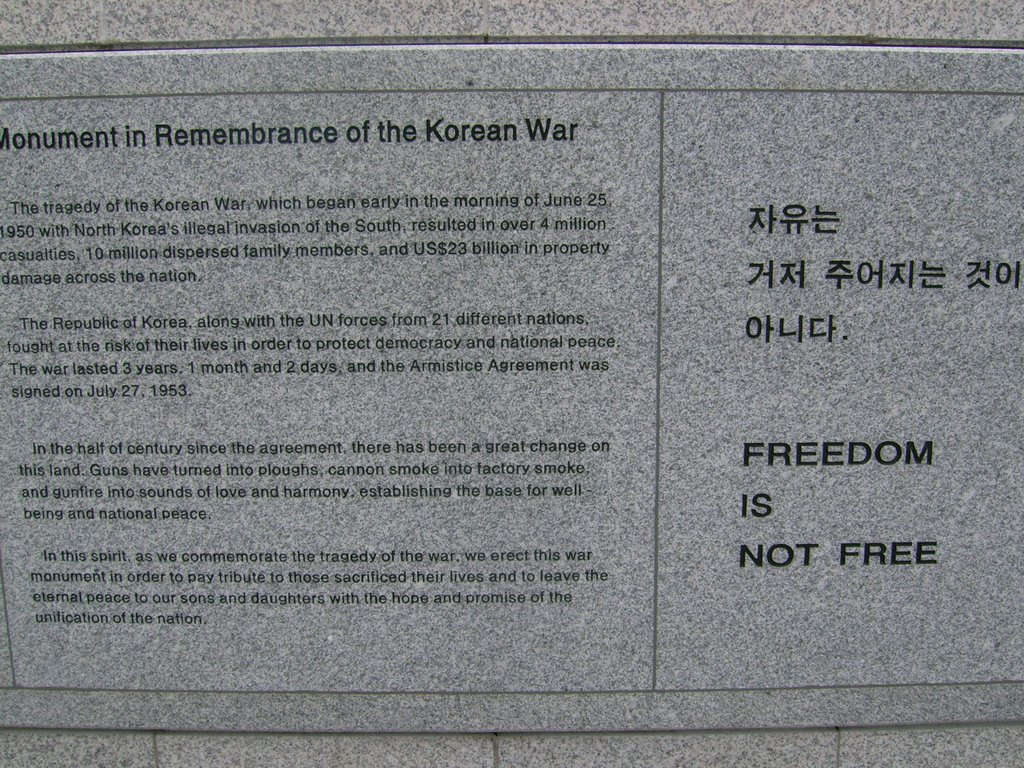
There are many sections inside the war museum. It is possible to learn a great deal about korean history and why they appreciate the U.N. so much. they are very proud members and feel their help in recent conflicts is repaymetns for the help given to them last century.

You can see battle plans and tactics of many wars as well as a mention of the propaganda used

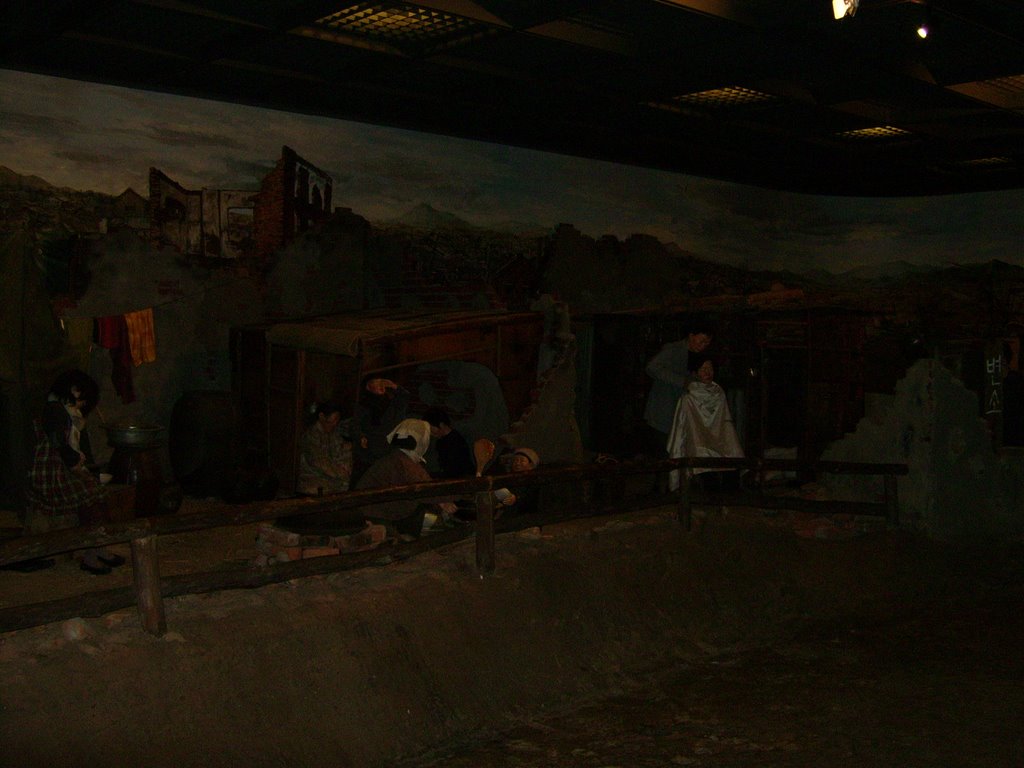
It is a living museum and you can see the hardship of what many citizens were forced to endure. I have seen many war museums in Britain they try to depict hardship but none have described living in recently dug holes and eating bark of the tree's.

The Japanese rule of korea lasted for nearly half a century and was only bought to an end after world war 2. Many of the astrological signs were used as a war cry to stop a native Korean uprising.

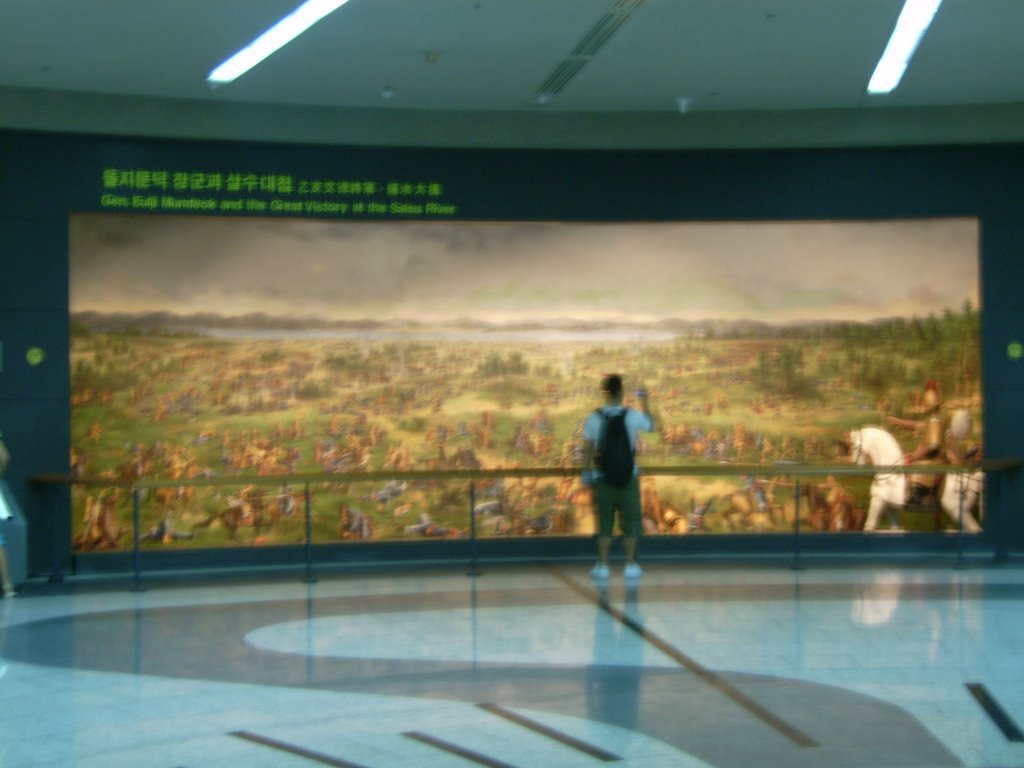
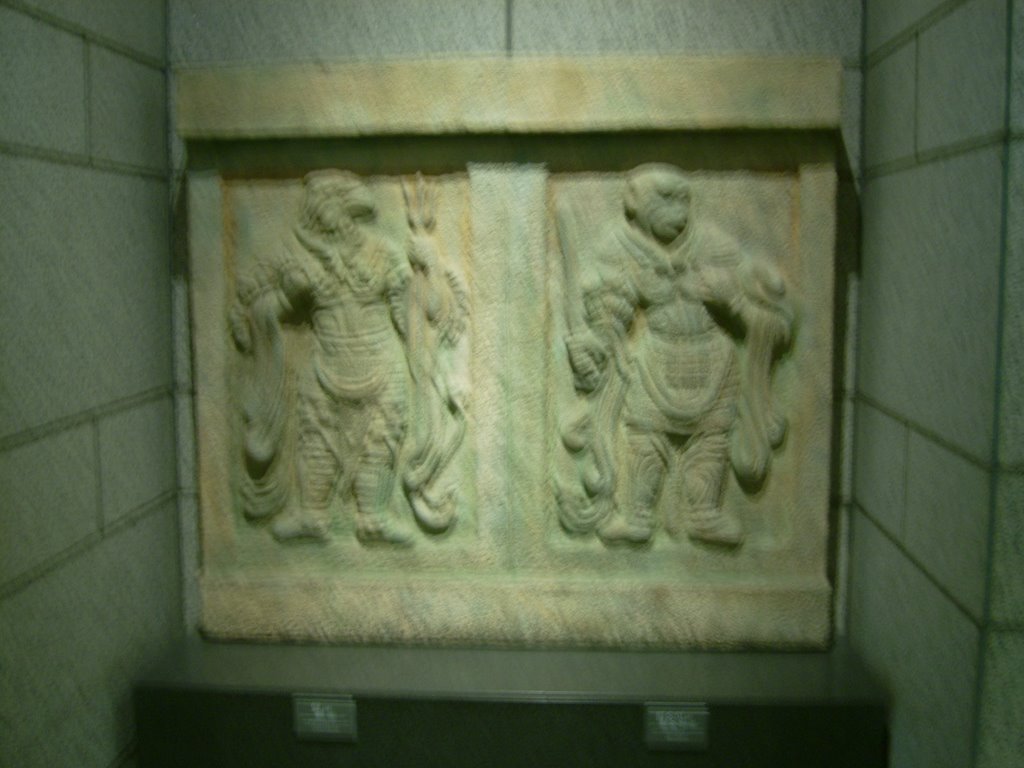
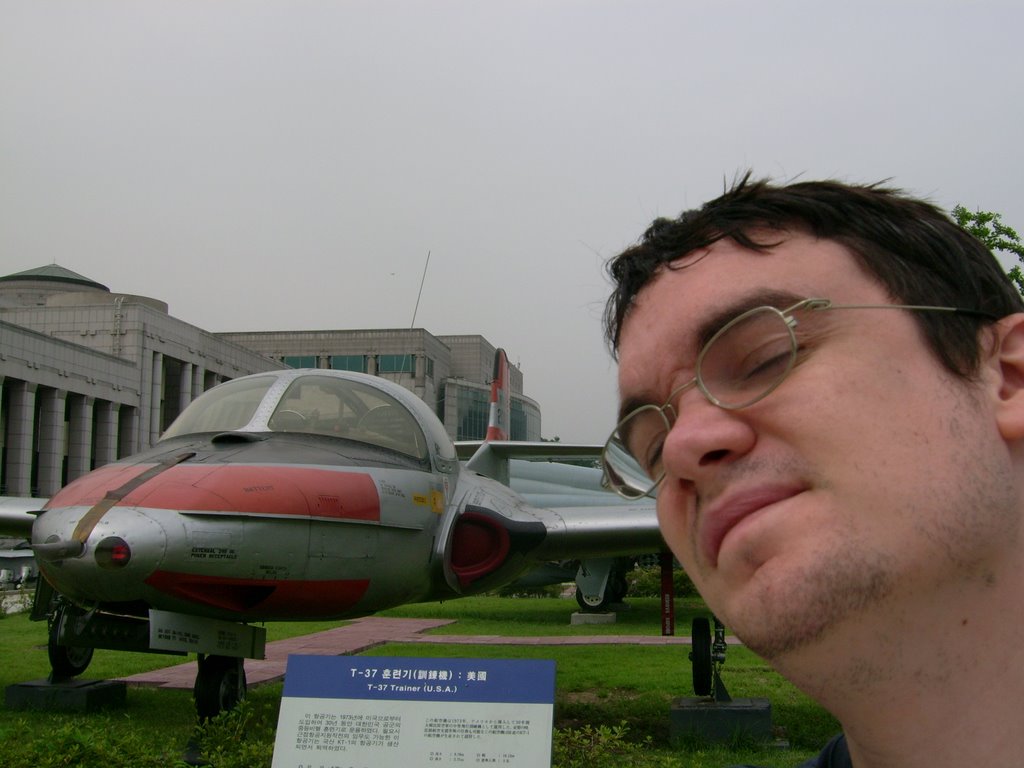
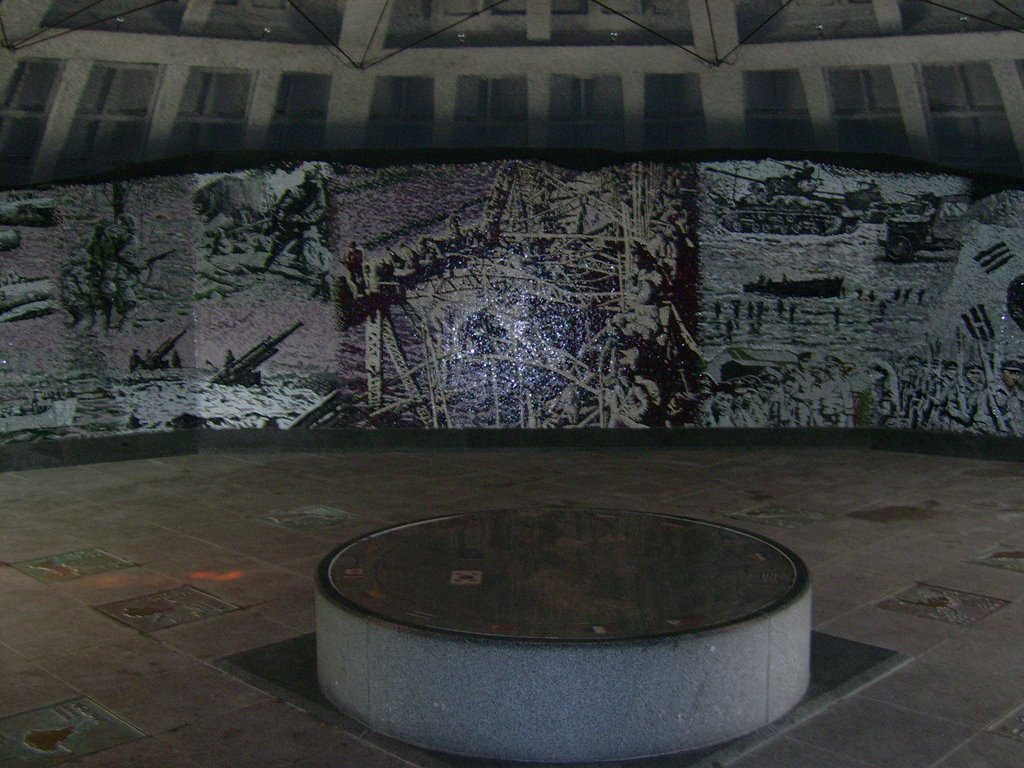
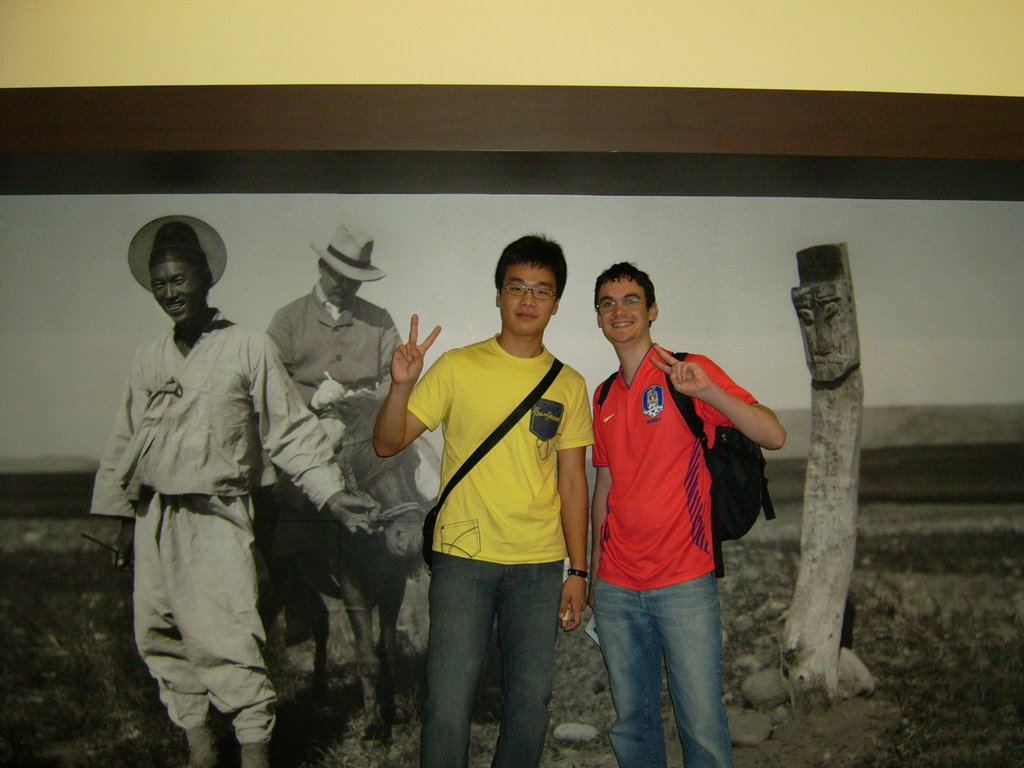
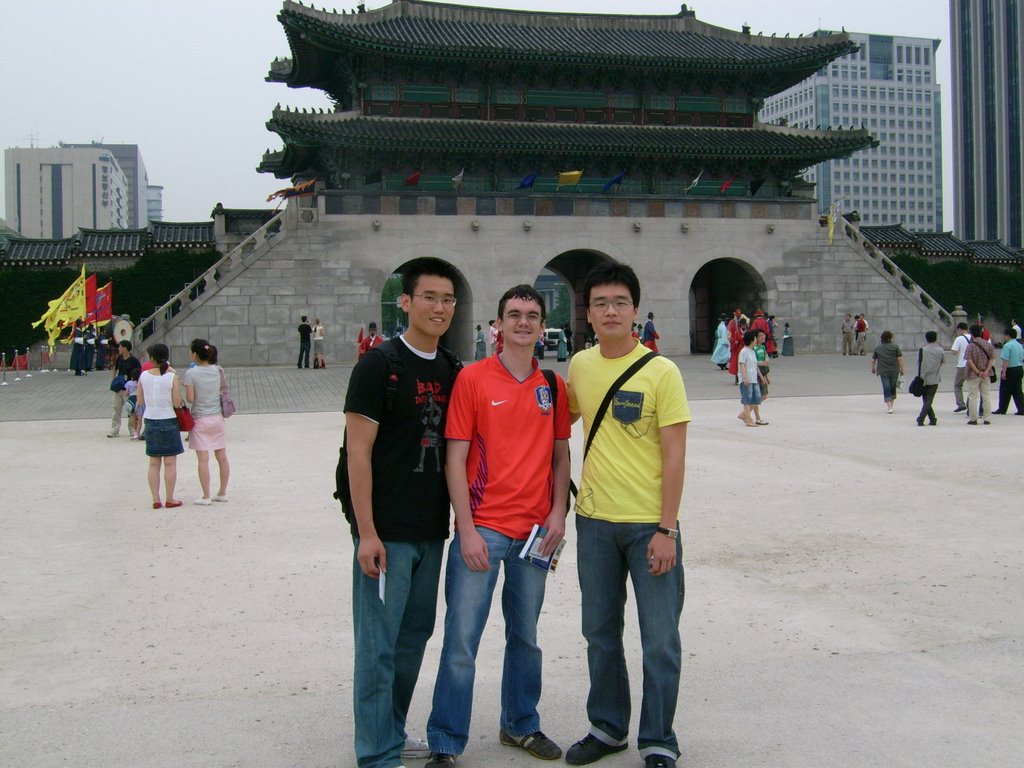
There are many great peices of art so I thought I would ruin them by getting my ugly mush in the picture. When the war started South Korea was completely unprepared and were outnumbered by nearly 5 to 1 in terms of men. The north also had 200 tanks compared to the south's...er... zero! Aerial attacks were also used with the north using 500 aeroplanes and helicoptors compared to the south's 10. It wasnt exactly a close war at first.

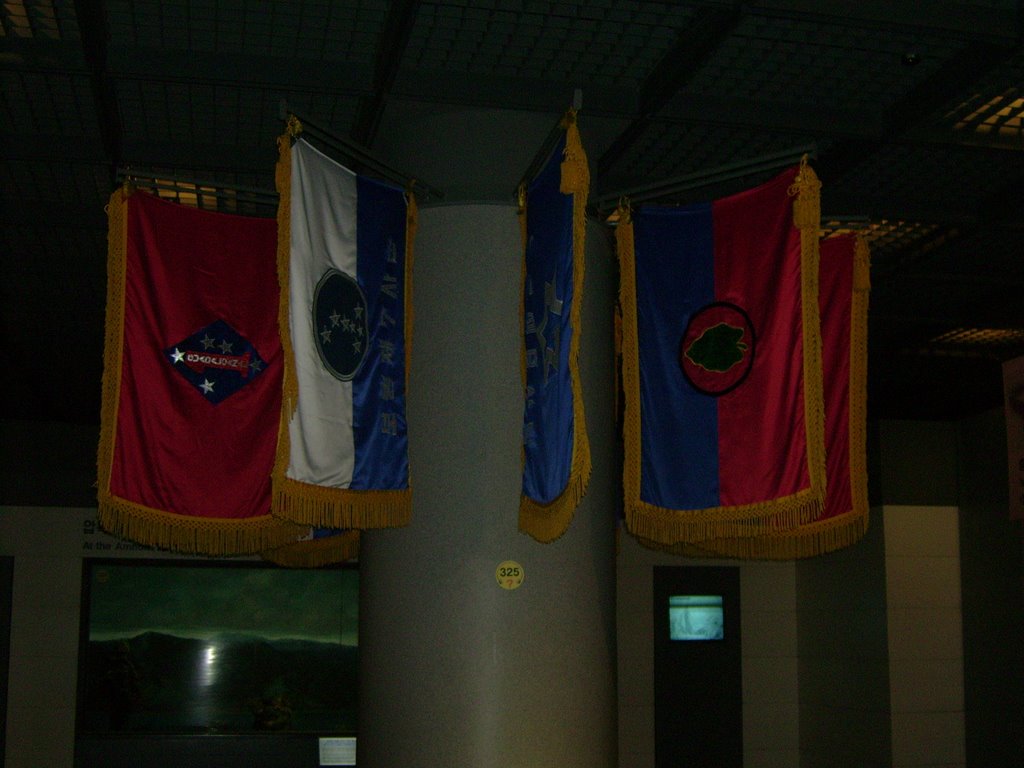
The capital, Seoul, was lost within 3 days (I imagined the French coming over to England through Dover and taking control of London in 3 days) and many of the infantry flags were taken and destroyed.

However the yanks came to the rescue and demanded North Korea retreat (it was partly America and Russia's fault the war started anyway) when they refused the U.N. combined and forced a retreat. This time the South Korean flags got to wave in the Northern capital Pyongyang. That was until the Chinese and Russian forces decided to help North Korea and eventually the opposing factions called a truce and drew up some land lines. Today there is still a demilitarized zone that South Koreans cannot cross and in the north, Americans are still used as a scapegoat for anything that goes wrong (I saw an unedited documentary where they were blamed for a powercut)

The rest of the museum focuses on the Japanese invasion. They also managed to take over Korea pretty quickly and nearly destroyed all of it s history. For the best part of 50 years in the early 20th century Hanguel (Korean) was abolished as a language and relics from the Joseon destroyed. Even in the olympics Korean athletes were forced to participate under the Japanese flag. If only those Japs hadn't bombed Pearl Harbour and annoyed the Americans they would probably have gotten away with it.
There are many other wars with the Mongols, Chinese and even an early British navy that the Koreans managed to repel. These are also well docmented.
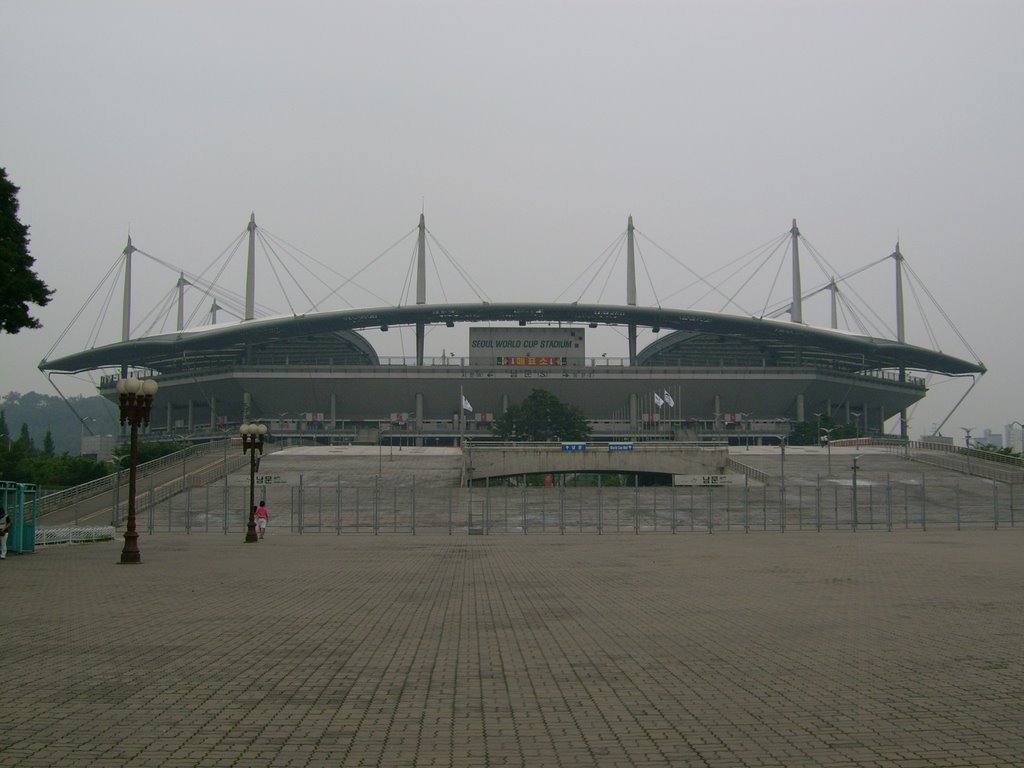
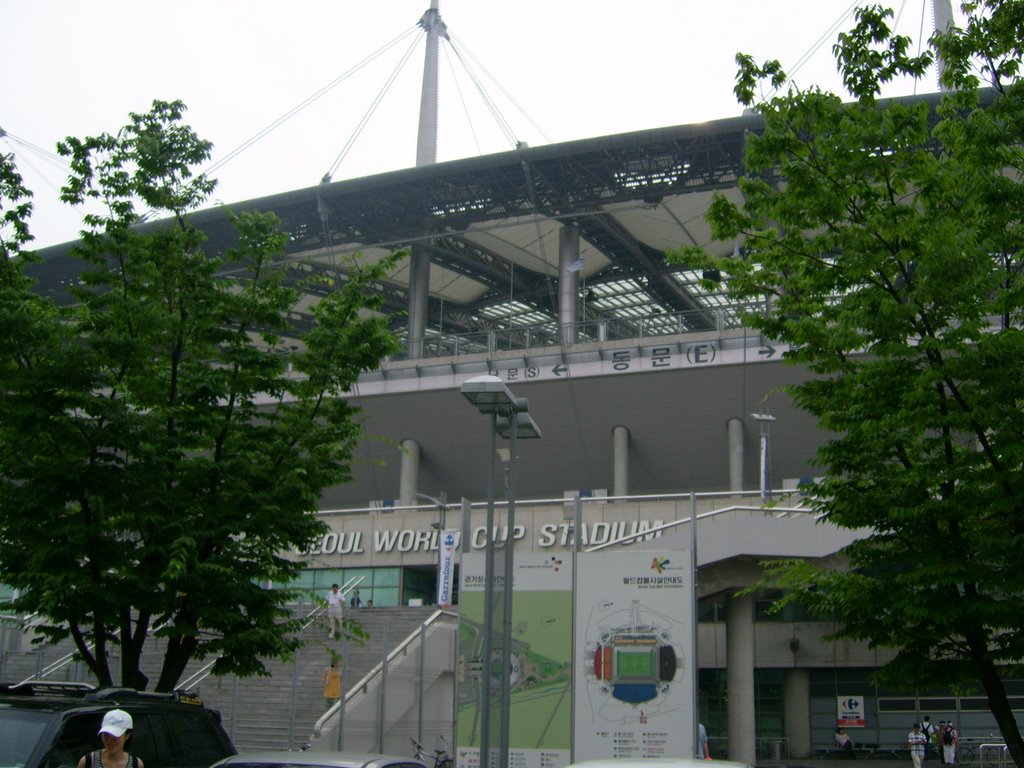
 One of the many things Korea is proud of is it's 2002 world cup squad. These fellows are some of the first people you meet upon entering the stadium and there are many videos describing how Korea shocked the world.
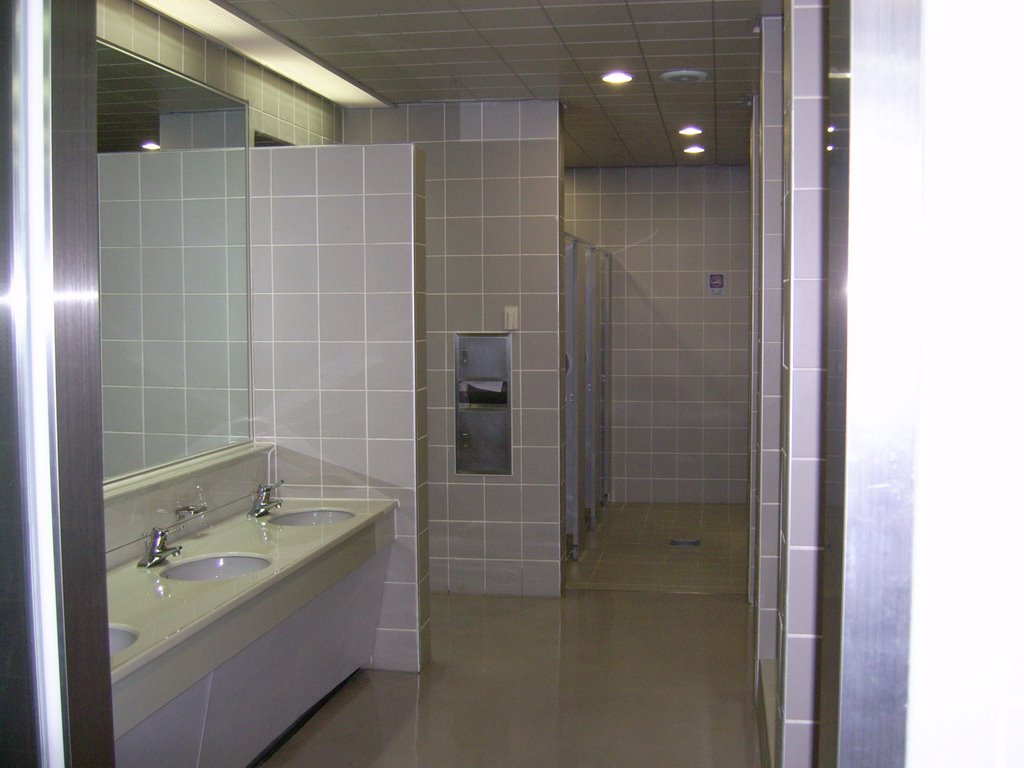 Ok it maybe a bit geeky but I can't help but wonder how many famous players got really nervous and used these facilities just off the main dressing room before a match.
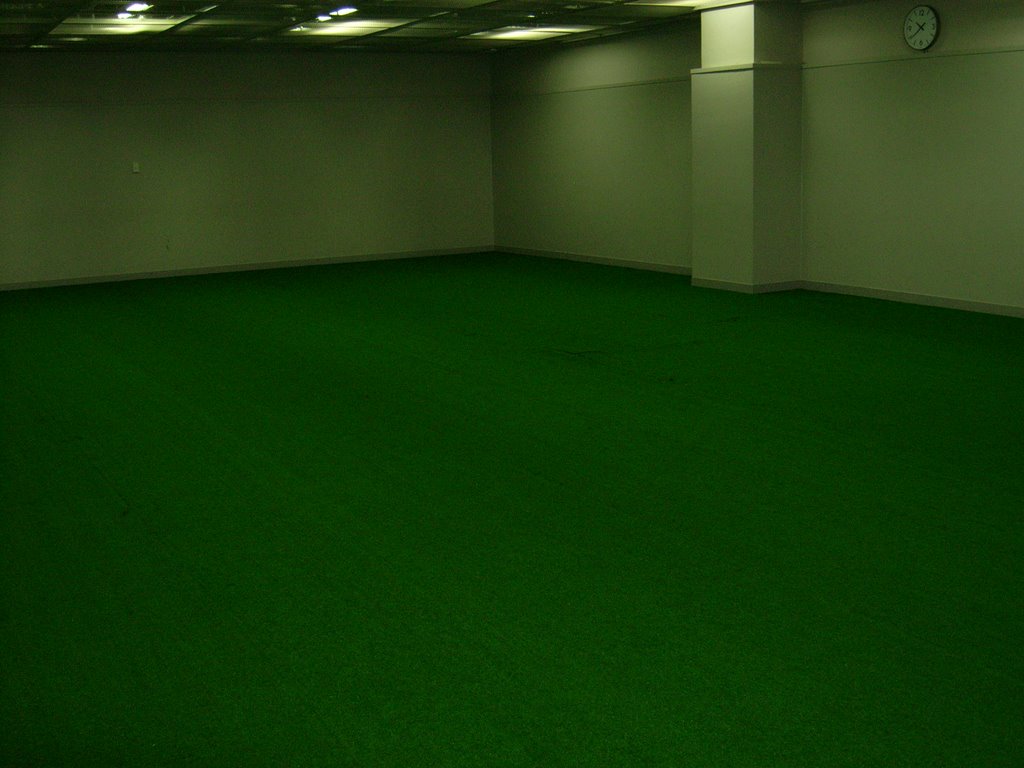 This may not look like much and in truth it is just a green room but that is artificial turf and used as a practise room before games.
 The locker rooms. i have to be honest apart from the medical room behind me I thought they were quite modest...
 ... but I don't really know what else you would expect in a dressing room.
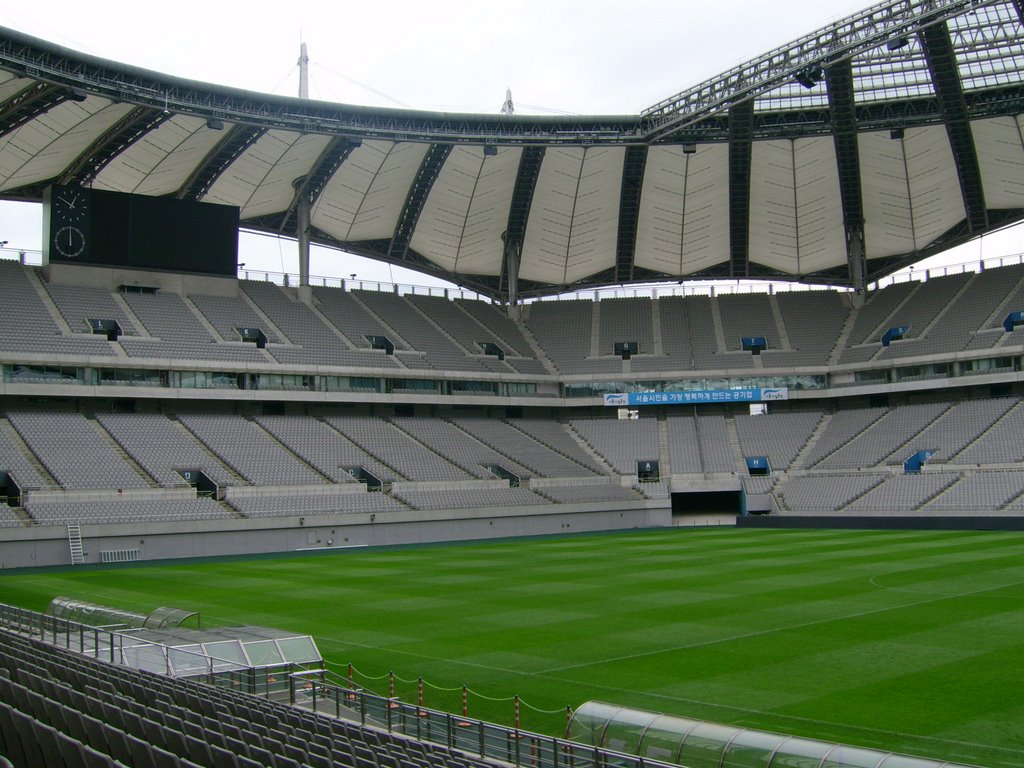
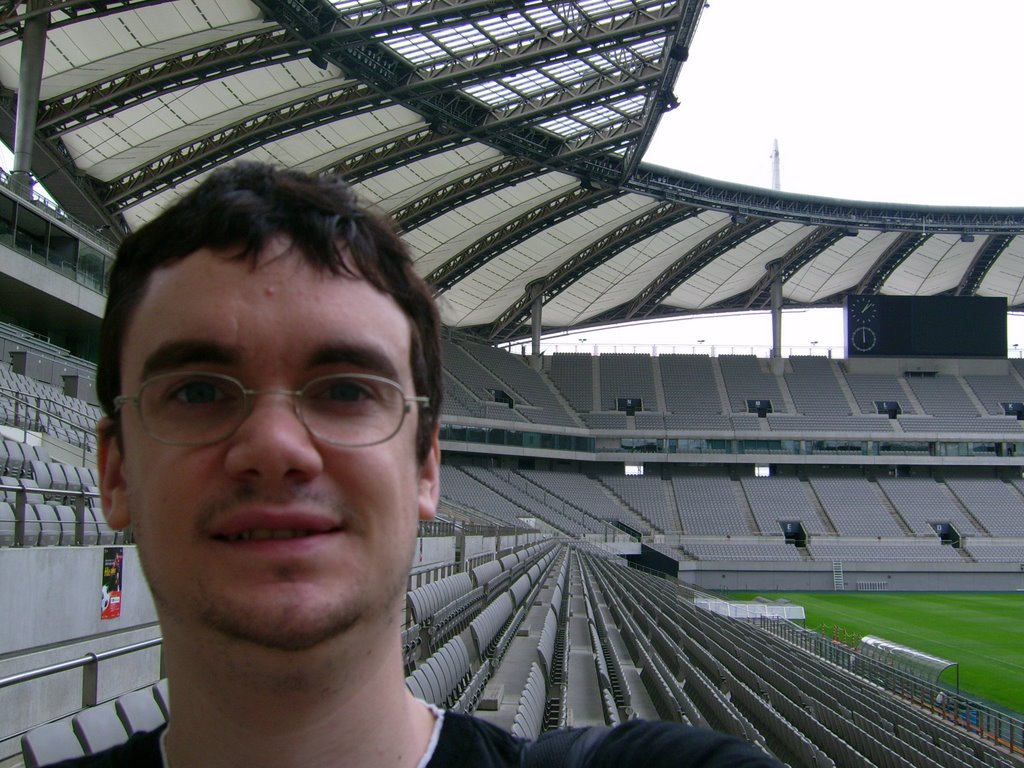 Enjoy some pictures of inside the stadium. I'm not a big fan of the grey but then claret and blue was always more colouful.
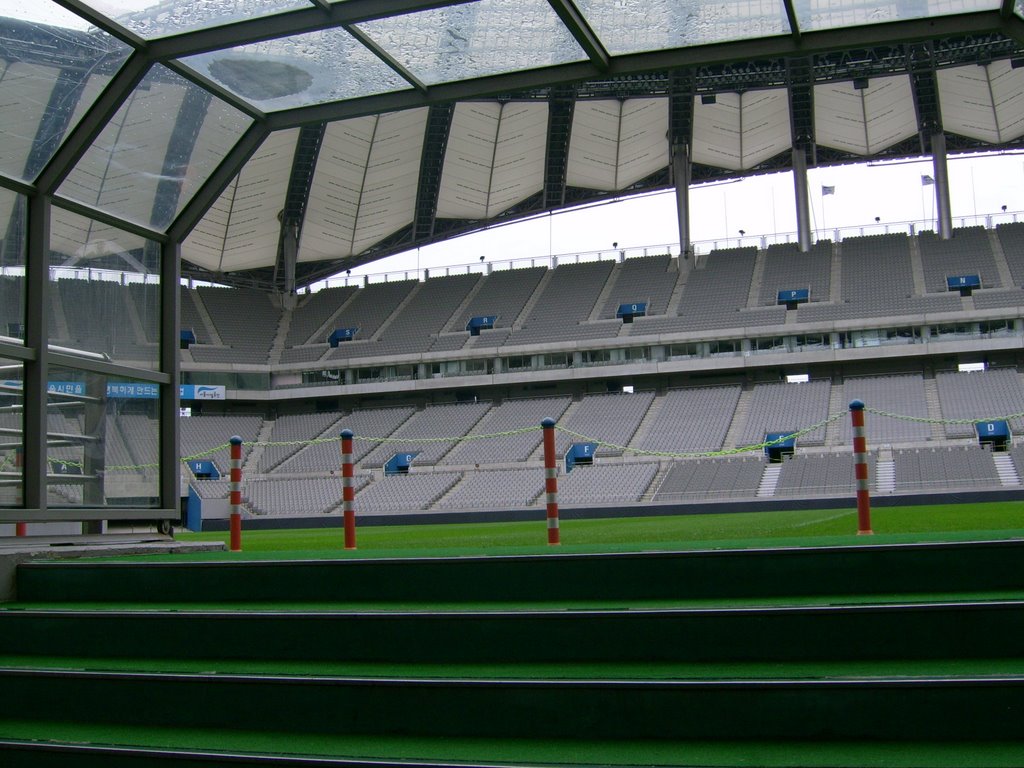 Last time I ran up these steps I was getting ready for the world cup semi final... no wait that was a dream.
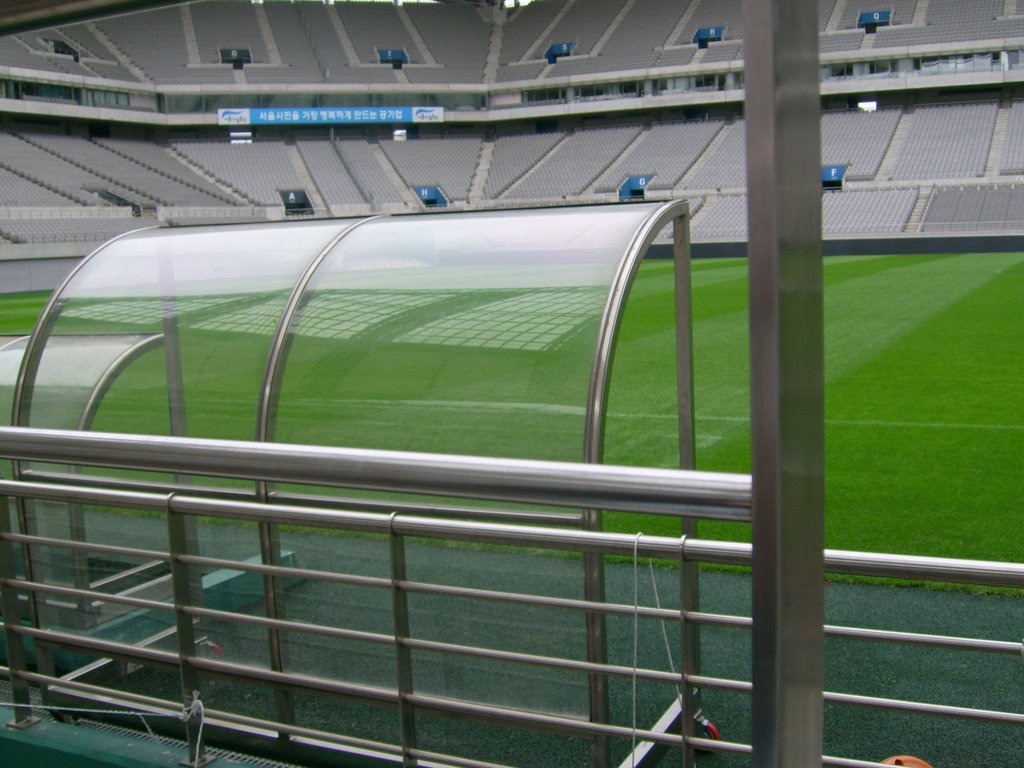 As close to pitch side as I could get without being whistled at. I don't think the guards liked me very much.